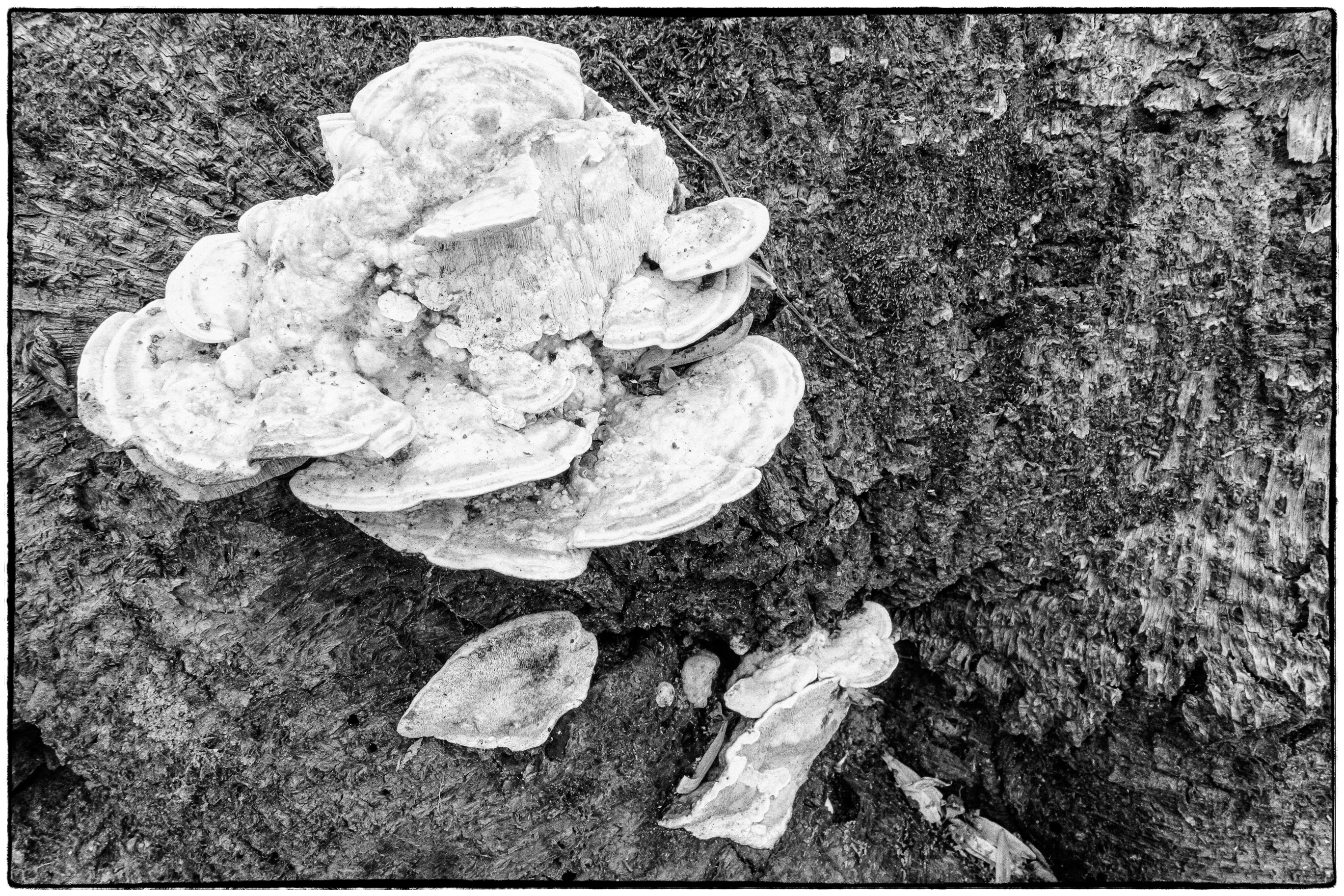
Fungus

From my research I believe this to a Mossy Maple Polypore (Oxyporus populinus), but I have some doubts as it doesn’t have the moss, which typically accompanies a fungus of this type. Oxyporus means “polypore with a sharp, acid taste”; populinus means ” inhabiting poplar (Populus) trees.”, which is odd since it’s mostly found near the base of living maples, not poplars. It’s usually and indicator that the tree is failing (although it could be some considerable time before it actually does). Apparently it’s inedible, but not poisonous.

Lest anyone think that I actually know something about fungi – I don’t. I just browsed the internet until I found something that looked like this and then “googled” the name for additional information. While looking I bumped into Field Guide to Common Macrofungi in Eastern Forests and Their Ecosystem Functions by Michael E. Ostry, Neil A. Anderson, Joseph G. O’Brien. Although hardly “a gripping read”, I was surprised to find that there are many edible, even choice mushrooms growing out there in the woods. Unfortunately it can be difficult to distinguish these from other types, which will probably kill you. It’s probably wise to following the warning on every page of the above field guide: “DO NOT eat any mushroom unless you are absolutely certain of its identity.”

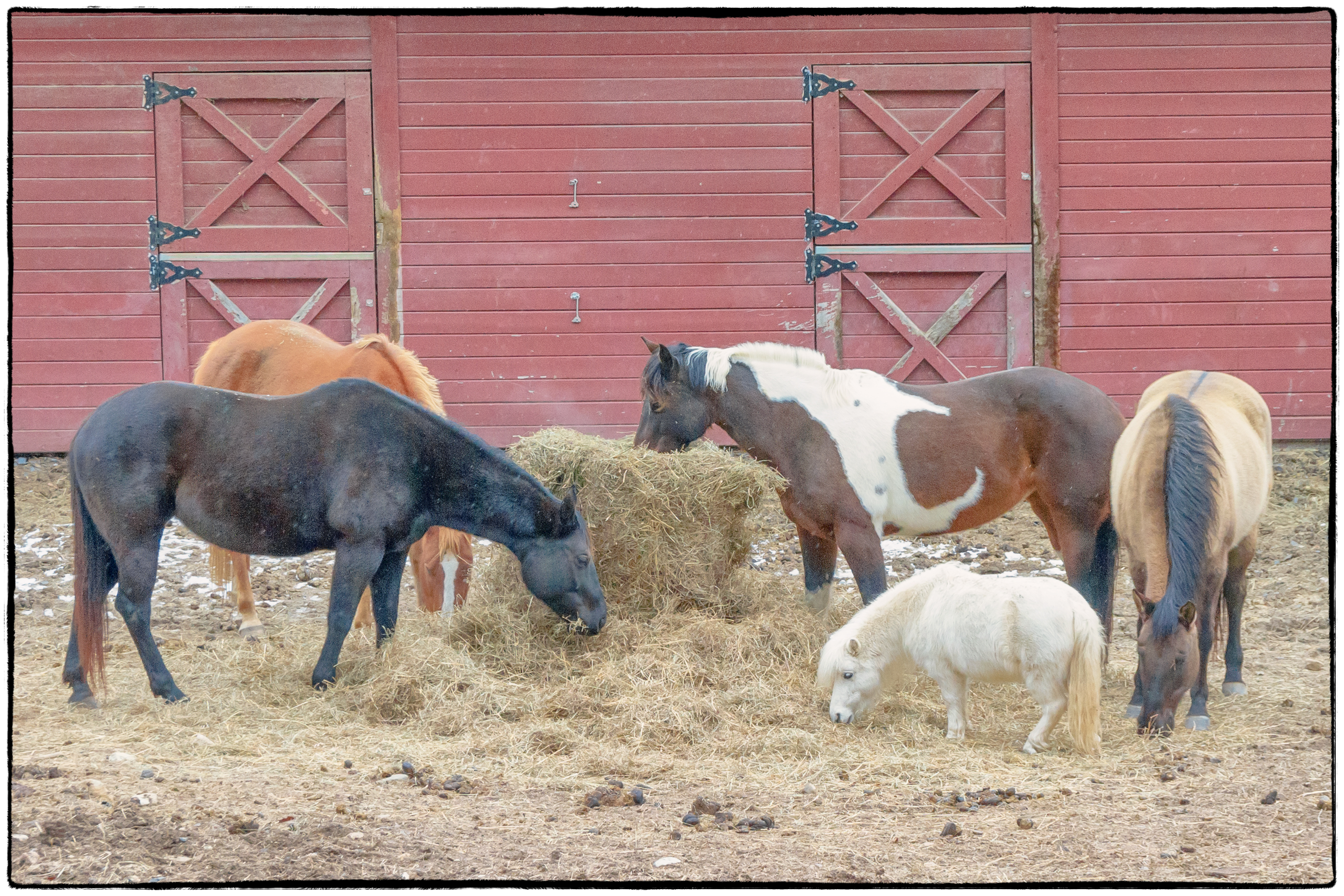
Horses Feeding. Cimarron Ranch.

There seems to be some history to the Cimarron Ranch, but so far I haven’t been able to find out much. I did come across these three short videos below showing the ranch in its heyday:

Cimarron Ranch, Eastern Dude Ranch Association, August 1945 (part 1 of 3)
Cimarron Ranch, Eastern Dude Ranch Association, August 1945 (part 2 of 3)
Cimarron Ranch, Eastern Dude Ranch Association, August 1945 (part 3 of 3)

I also came across this obituary for Clark James “CJ” Walter, which contains the extract below and sheds some light on the history of the ranch:

With his brother Vern, C. J. pioneered dude ranching in the east, and was founder of the first Eastern Dude Ranching Association. SKI HI RANCH, the first eastern dude ranch was opened at Warrensburg, New York in the late 1930’s by Vernon Walter.

In 1938, the two brothers assumed management of the Diamond O Ranch in Peekskill. This ranch was later renamed Cinnabar. This became one of the most popular vacation spots in the east.

In 1939, the two brothers opened Cimarron Ranch in Putnam Valley, which was an immediate success and is now the oldest dude ranch in the east.

The Cinnabar Ranch property was sold in 1946 and became the Continental Village Development. Mr. Walter later owned the Walter Ranch in Garrison, New York. He was also associated with two other dude ranches including the Au Sable Guest Ranch in Michigan, the Lost Wilderness Ranch in Massachusetts and the Flying W Ranch in Garrison, New York.

Hosted Many Celebrities

He was a popular host noted for his generous hospitality. Among his friends were Cowboy Hoot Gibson, Roy Rogers and Dale Evans, radio star Bess Johnson, newspaper reporter Jimmy Powers, Representative Fred Gamble of Westchester, Don Short, Gene Ward, Charles Sievert, writer Lowell Thomas, Senator from Connecticut, Dick Forester, Fred Barton, of the cast of Mr. Roberts (and later the inventor of the teleprompter). A frequent guest was Harry Conner, owner of the Conover Modeling Agency.

Personality sketches of C. J. often appeared in the metropolitan and national magazines during the hay-days of the Cinnabar Ranch.

Harry Tompkins, a Peekskill school boy, became his prodigy at Cinnabar and learned to ride with the Walter children. He rode bareback broncos and bulls. He went on to become a World Champion Cowboy in the R.C.A. (Rodeo Cowboys’ Association).

Varied Career

The dude ranch business was a culmination of a varied and adventurous career. As a youth he tended sheep on his father’s ranch. Later he worked as a surveyor on the Hudson Bay Railroad. He owned and operated hotels, pool halls and saloons in the Canadian West. He once owned and operated a draying business which later evolved into a motor stage and later into a bus line.With several partners, Mr. Walter owned the first professional baseball league in western Canada. He once hired the baseball player Jim Thorpe.

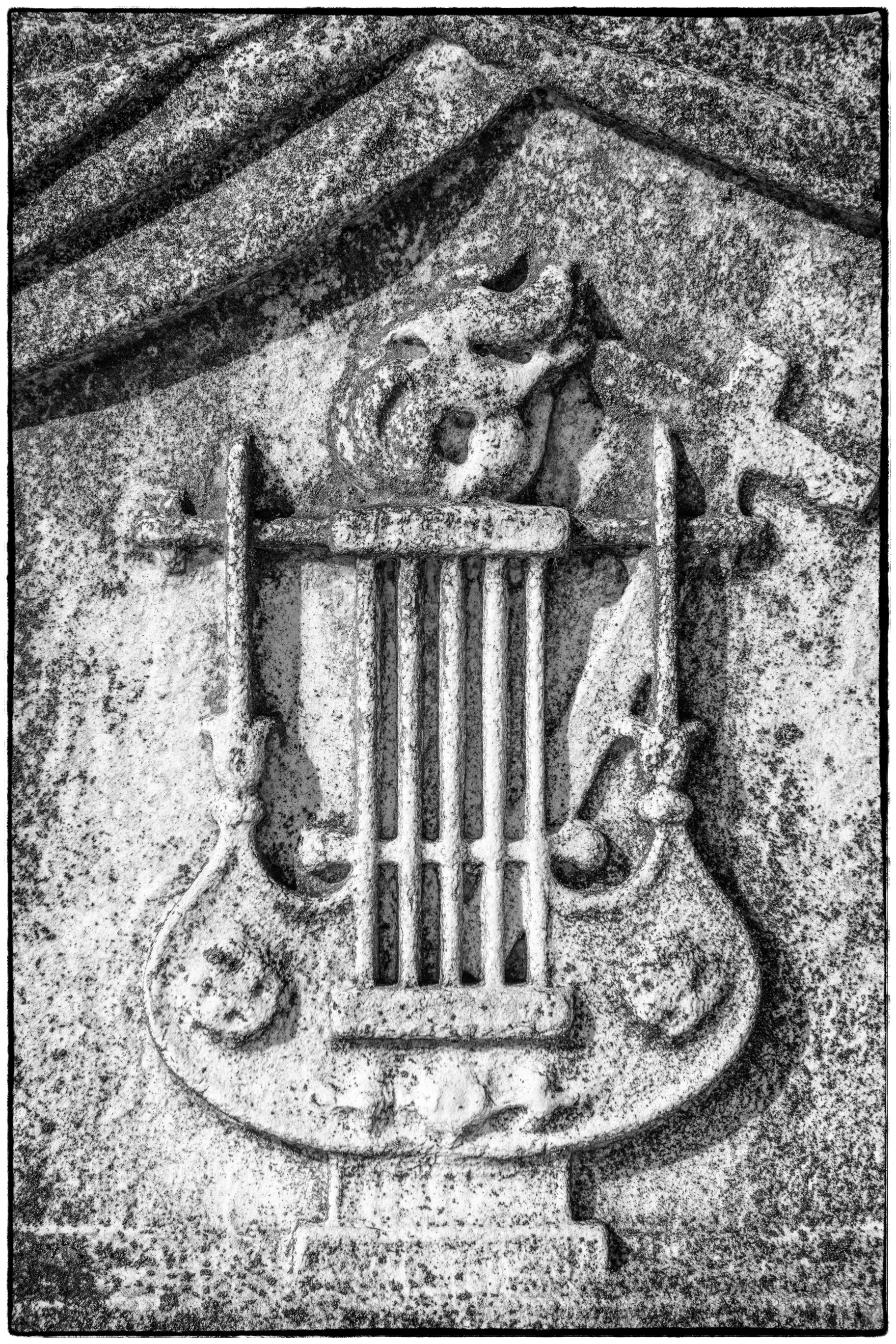
Detail of a gravestone at Sleepy Hollow Cemetery

A lyre. The instrument of Apollo, the lyre is a Greek symbol denoting heavenly accord, harmony, and music and song praising God. It could also be seen as a harp, which is a symbol of heavenly music, or hopes of heaven. Stringed instruments such as these are often associated with Divine music. Lyres on gravestones often (but not in this case) have a broken string symbolizing the end of life. A harp might also suggest someone of Irish heritage. This symbol often appears on the graves of musicians

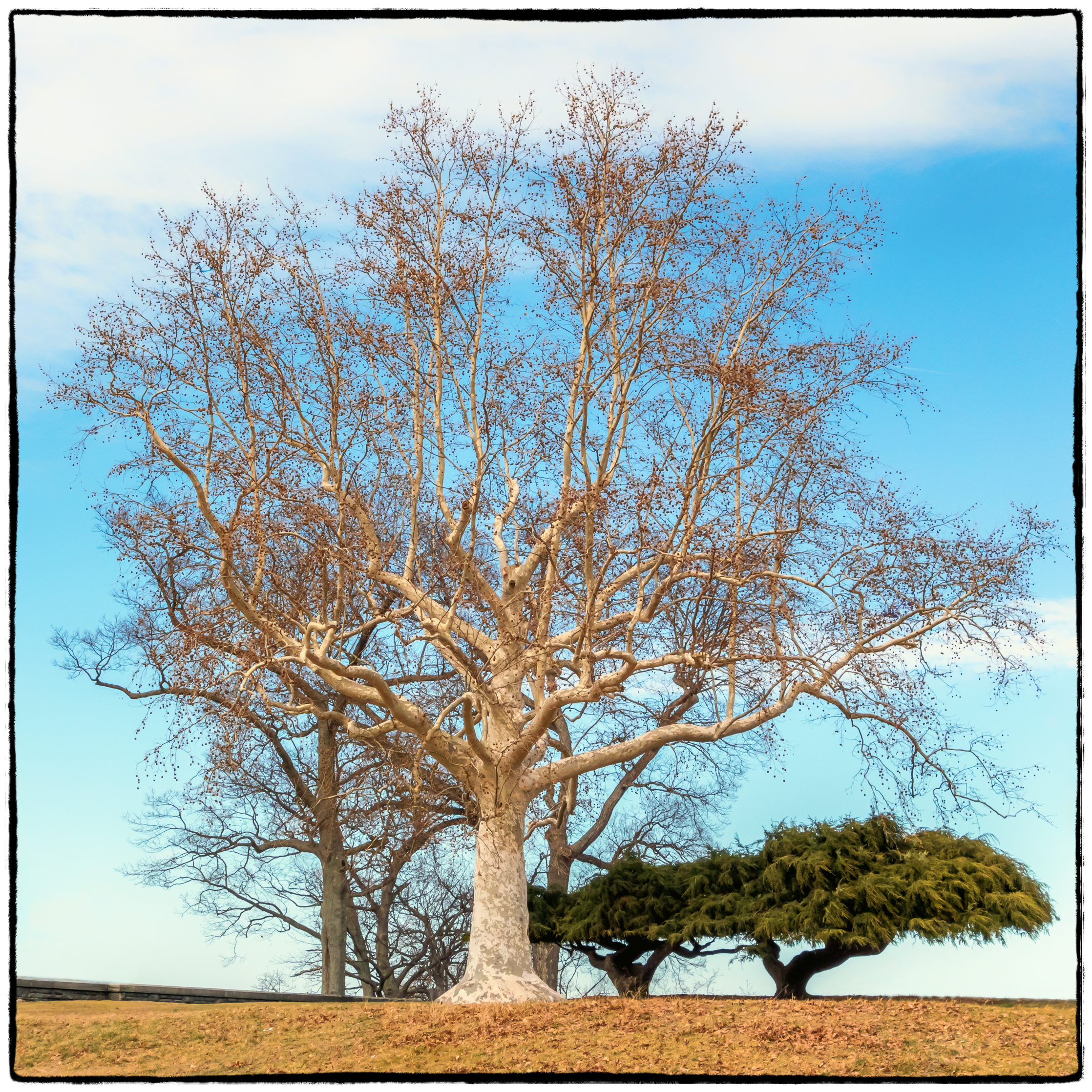
Tree at Rockwood Hall

According to my research it’s a Sycamore. It’s much lighter than any of the trees around it and the bark is very smooth and has interesting patterns. It’s also unusually symmetrical. I’ve always thought there was something different about this tree, but didn’t know exactly what it was. I recently read that the main trunk had broken off (maybe in a lightning strike) and I believe it’s this that gives the tree it’s “different” appearance.

I’ve taken pictures of this tree many times and liked none of them. I didn’t start off with high expectations today either. My wife has a dance class at 11:15 am on Saturday and I’m usually walking the dog between 11:30 and 1:00pm – hardly the best time of day for photographs: very bright harsh light with very high contrast leading to dark shadows. This time, however, the sun was hidden behind a layer of thin clouds which softened the light considerably. I also managed to find a better angle than I had before.